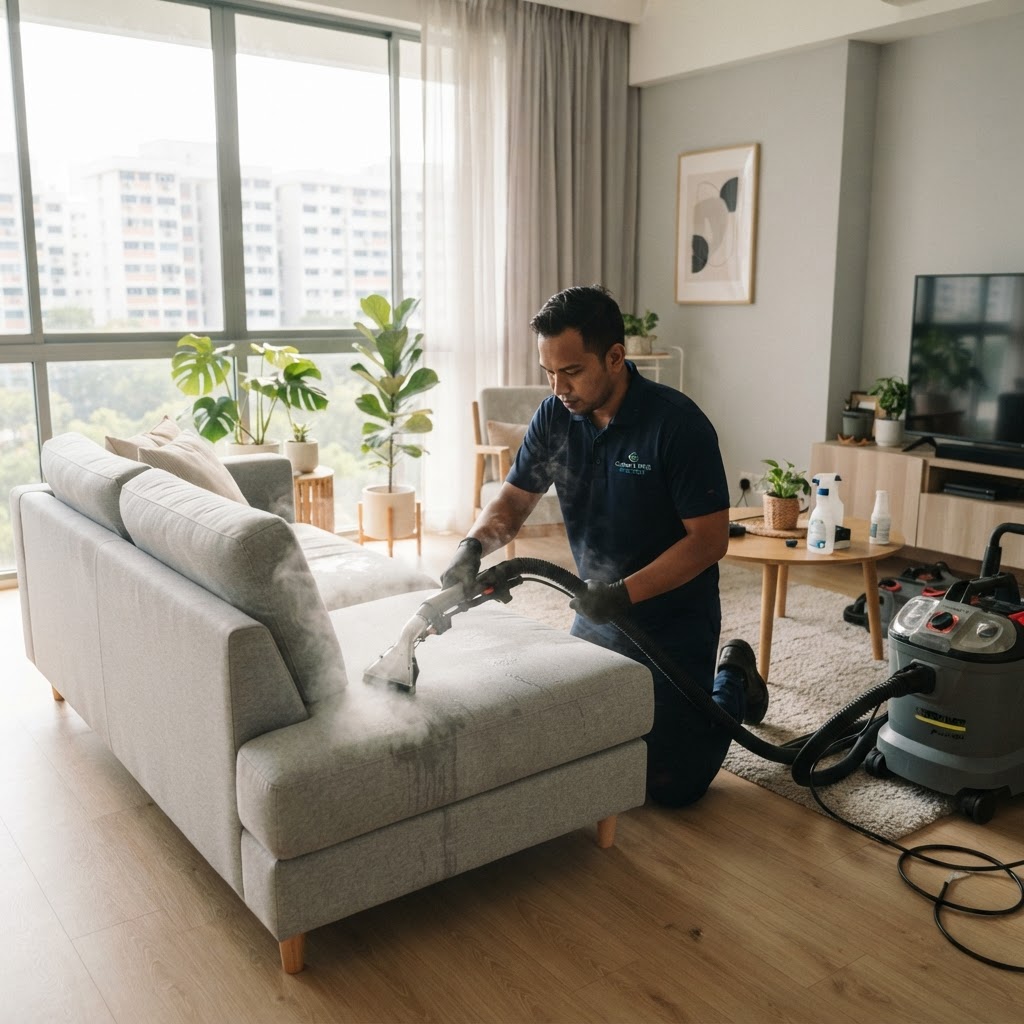
If you've been searching for how to wash a fabric sofa in Singapore, you're probably dealing with a visible stain, a lingering smell, or a sofa that simply looks dull and overused. Singapore's hot, humid climate accelerates the buildup of dust mites, body oils, and moisture inside fabric upholstery — making regular washing more important here than in drier countries.
Direct answer: You can wash a fabric sofa in Singapore using a combination of vacuuming, spot treatment, and either a foam-based DIY clean or a professional hot-water extraction service. DIY methods work for light surface soiling, but deep-seated stains, odours, and dust-mite infestations typically require professional injection-and-extraction cleaning to be fully resolved.
Key takeaways
- Fabric sofas in Singapore need washing every 6–12 months due to humidity, dust, and daily use.
- Always check the care label (W = water-safe, S = solvent only, X = vacuum only) before applying any liquid.
- DIY foam cleaning suits light maintenance; professional extraction reaches fibres foam and spray cannot.
- Professional fabric sofa cleaning in Singapore starts from $60 for a 1-seater with no hidden surcharges.
- Drying time after professional extraction is typically 2–4 hours with good ventilation or aircon.
- Same-day or next-day appointments may be available — confirm via WhatsApp before booking.
Why fabric sofas in Singapore need regular washing
Singapore's year-round humidity — routinely above 80% — creates ideal conditions for dust mites, mould spores, and bacteria to thrive inside upholstered furniture. A fabric sofa in an HDB flat or condo absorbs sweat, food particles, pet dander, and airborne grime continuously. Unlike hard surfaces you can see getting dirty, fabric traps contaminants deep in the weave where a weekly vacuum won't reach.
Landed homes with more floor space often have larger sectionals that are harder to move and ventilate. Families with young children or pets face even faster soiling cycles. The result: without periodic deep washing, your sofa can become a significant source of allergens and odours even if it looks reasonably clean on the surface.
For households with allergy sufferers or asthma, washing fabric sofas regularly isn't just about appearance — it's a health consideration.
How to check your sofa's care label first
Before you apply any water or cleaning product, locate the care tag — usually tucked under a cushion or beneath the sofa base. The code tells you what's safe:
| Code | Meaning |
|---|---|
| W | Water-based cleaning safe |
| S | Solvent/dry-clean only — no water |
| WS | Either water or solvent methods safe |
| X | Vacuum only — no liquid of any kind |
Most modern fabric sofas sold in Singapore carry a W or WS code, meaning water-based washing is permitted. If yours says S or X, skip DIY wet cleaning entirely and go straight to a professional who has the right solvents and equipment.
DIY method: how to wash a fabric sofa at home
For W or WS-coded sofas with light soiling, here's a safe step-by-step approach:
- Vacuum thoroughly — Use an upholstery attachment to remove loose dust, crumbs, and pet hair from all surfaces including crevices and under cushions.
- Test for colour fastness — Mix a small amount of mild dish soap or upholstery shampoo with water. Apply to a hidden patch (under cushion flap). Wait 5 minutes and blot. If colour transfers, stop and call a professional.
- Apply foam cleaner — Work upholstery foam into the fabric in circular motions using a soft brush. Don't saturate — damp is the goal, not wet.
- Blot stains — For specific stains, blot with a clean white cloth. Never rub, as rubbing spreads the stain and damages fibres.
- Rinse lightly — Wipe the treated area with a clean damp cloth to remove soap residue.
- Dry properly — Open windows, switch on a fan or aircon, or use a portable dehumidifier. In Singapore's humidity, inadequate drying can lead to mildew smell within 24 hours.
DIY washing is a reasonable maintenance measure between professional cleans. It is not a substitute for deep extraction when stains, odours, or dust-mite populations are the real issue.
When DIY isn't enough: signs you need professional sofa washing
Some situations call for professional-grade equipment. Consider booking a professional wash if:
- The stain is old or set — Dried coffee, wine, or urine that has bonded with fibres won't lift with surface cleaning.
- There's a persistent smell — Musty, pet, or food odours trapped in the foam padding require extraction, not surface treatment.
- The sofa hasn't been washed in over a year — Accumulated dust mites and skin cells need hot-water extraction to dislodge.
- You have allergies — Professional hot-steam and extraction methods reduce allergen load far more effectively than DIY.
- The fabric is delicate or the label says S — Wrong products on the wrong fabric can cause shrinkage, colour bleeding, or permanent damage.
For a professional deep clean, SofaCare SG's fabric sofa cleaning service in Singapore uses industrial injection-and-extraction equipment that forces hot water into the fibres and immediately vacuums it back out along with dissolved soils — a process no spray bottle or foam cleaner can replicate.
What to expect from a professional fabric sofa wash
Here's the typical process a qualified technician follows on-site:
- Inspection and colour-fastness test — The technician checks fibre type, existing damage, and tests the fabric's reaction to cleaning agents in a discreet spot.
- Industrial vacuuming — High-powered vacuuming removes surface debris before wet treatment begins.
- Targeted stain pre-treatment — Specific stain types (protein, tannin, oil) receive the correct pre-treatment product applied at dwell time.
- Deep injection and extraction — Hot water and cleaning solution are injected into the fabric under pressure and immediately extracted, pulling out embedded soils, allergens, and bacteria.
- Sanitising and odour treatment — A safe sanitising agent is applied; fabric is groomed back to its natural lay.
- Final inspection — The technician reviews the result with you before leaving.
Note: no reputable cleaner can guarantee 100% stain removal — some stains permanently alter fabric dye or fibres regardless of technique.
DIY vs professional fabric sofa washing: a quick comparison
| Factor | DIY Washing | Professional Extraction |
|---|---|---|
| Cost | $5–$20 (products) | From $60 (1-seater) |
| Depth of clean | Surface fibres only | Full fibre depth + padding |
| Stain removal | Light, fresh stains | Old, set, and complex stains |
| Drying time | 4–8 hours | 2–4 hours (extraction removes most moisture) |
| Dust mite reduction | Minimal | Significant |
| Odour elimination | Partial | Full (treats source) |
| Safe for delicate fabrics | Risk if wrong product used | Yes, with proper testing |
| Convenience | Self-managed | On-site, you don't lift a finger |
How often should you wash a fabric sofa in Singapore?
Frequency depends on household type:
| Household | Recommended Wash Frequency |
|---|---|
| Single adult, low use | Every 12 months |
| Couple, moderate use | Every 9–12 months |
| Family with children | Every 6 months |
| Pets in the home | Every 4–6 months |
| Allergy or asthma sufferers | Every 3–6 months |
In between professional washes, a monthly vacuum and prompt spot-treatment of spills will significantly extend how fresh your sofa stays. You can also explore related guidance on removing common stains and odours from upholstered furniture for between-wash maintenance tips.
Cost and pricing for washing a fabric sofa in Singapore
SofaCare SG prices fabric sofa cleaning transparently with no hidden transport, location, or weekend surcharges. Your quote is confirmed before the appointment is booked.
| Sofa Type | Starting Price |
|---|---|
| 1-seater | $60 |
| 2–3-seater | $87 |
| 4-seater | $107 |
| 5-seater | $127 |
| 3+2 set | $150 |
| L-shaped / sectional | Add $20 to relevant size |
| Hot steam add-on | From $20 |
For context, a typical HDB living room sofa (2–3-seater) costs $87 for a full deep wash — less than most restaurant dinners for two, and the clean typically lasts 6–12 months with normal household use.
If you're also due for a mattress clean, you can check mattress cleaning pricing in Singapore to bundle both in a single visit, which saves time and sometimes allows for scheduling efficiency.
Drying time after washing a fabric sofa
One of the most common concerns is how long the sofa takes to dry after a wet wash. For professional hot-water extraction, drying time is typically 2–4 hours under normal Singapore indoor conditions (aircon or fan running). The extraction process removes a significant portion of the water immediately, leaving the fabric damp rather than wet.
To speed drying:
- Keep aircon running at 24–25°C with low humidity mode if available
- Point a standing fan directly at the sofa
- Open windows if weather permits
- Avoid sitting on the sofa until dry to the touch
With DIY foam methods, drying can take longer (4–8 hours) because more moisture is left in the fabric. In Singapore's humidity, always prioritise airflow to prevent a musty smell from developing.
Singapore service areas: island-wide, no surcharges
SofaCare SG operates across all of Singapore with no transport or location surcharges. Whether you're in a Tampines HDB, a Bukit Timah landed home, a Punggol condo, or a Queenstown flat, the price you're quoted is the price you pay.
Service areas include: Bedok, Tampines, Pasir Ris, East Coast, Woodlands, Yishun, Sengkang, Punggol, Serangoon, Bishan, Toa Payoh, Queenstown, Bukit Timah, Jurong, Choa Chu Kang, Clementi, Holland Village, and all other Singapore districts.
For urgent situations — a big spill, a pet accident, or guests arriving tomorrow — same-day appointments may be available subject to technician availability. WhatsApp is the fastest way to check a slot.
How to wash a fabric sofa in Singapore: conclusion
Washing a fabric sofa in Singapore is a combination of smart maintenance habits and knowing when a job is beyond what DIY can handle. For fresh, light surface soiling, a careful home clean using the right foam product and good ventilation works. For anything deeper — persistent odours, set stains, visible grime, or a sofa that hasn't been washed in over a year — professional hot-water extraction delivers results that surface methods simply can't match.
Given Singapore's climate, treating your fabric sofa to a thorough wash once or twice a year isn't a luxury — it's practical upkeep that extends the life of the furniture and keeps your living space genuinely clean.
---
Ready to book? WhatsApp SofaCare SG at +65 9025 9771 for a no-obligation quote — we'll confirm the price before your appointment is set.