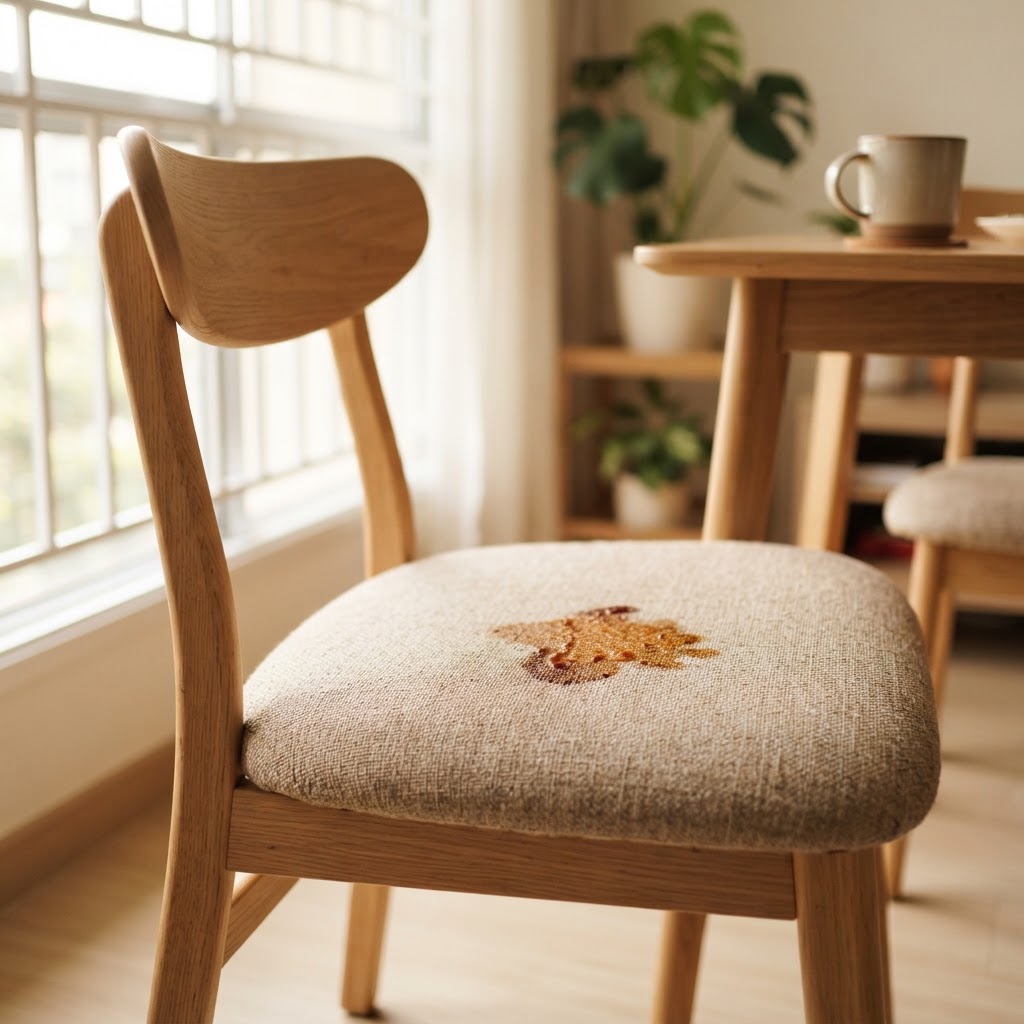
Dining chairs take a daily beating — sauces, coffee, children's spills, and the occasional curry disaster. If you're searching for dining chair upholstery stain removal in Singapore, you're likely staring at a stain right now and wondering whether to tackle it yourself or call someone in. The honest answer: first response matters enormously, and the fabric type you're dealing with determines everything after that.
Professional upholstery cleaning in Singapore for dining chairs involves targeted pre-treatment of the stained area, deep hot-water injection and extraction, and sanitising — carried out on-site at your home without you needing to move a thing. For fresh spills, a careful DIY blot can limit damage; for set-in stains, oil-based marks, or delicate fabrics, professional cleaning consistently produces better results and avoids fabric damage from harsh household chemicals.
Key Takeaways
- Act fast: blot (never rub) fresh spills immediately to prevent the stain setting into the fibres.
- Fabric type matters — polyester and microfibre tolerate light DIY treatment better than velvet, linen, or silk-blend dining chairs.
- Singapore's humid climate accelerates mould and odour development in wet or food-stained upholstery, making thorough drying critical.
- Professional stain pre-treatment targets specific stain chemistry (protein, tannin, grease) in ways general household cleaners cannot.
- No professional cleaner can guarantee 100% removal of every stain — older, heat-set, or dye-transfer stains may be permanent.
- On-site professional cleaning across Singapore carries no transport or weekend surcharges when booked through SofaCare SG; you can also review the published cleaning prices before arranging a visit.
Why Dining Chair Stains Are Harder to Remove Than They Look
Dining chairs sit in the one room in your home where food, drink, grease, and children's craft activities converge daily. The fabric fibres absorb staining agents quickly, and in Singapore's heat and humidity, organic matter — food residue, milk, blood — can begin to degrade and set within hours.
Common stain types on dining chair upholstery include:
- Protein stains: egg, dairy, blood — these require cool water treatment; hot water sets them permanently.
- Tannin stains: coffee, tea, red wine, soy sauce — water-soluble initially but become stubborn once dry. For a fresh coffee accident, the same first-response principles are covered in our coffee spill sofa cleaning guide.
- Grease and oil stains: cooking oil, butter, salad dressing — require solvent-based pre-treatment, not water alone.
- Dye transfer: ink, markers, coloured fabric rubbing off — often the most difficult to reverse.
Using the wrong treatment on the wrong stain type is the fastest way to make the problem worse, or to permanently alter the fabric colour.
DIY First Response: What to Do in the First 10 Minutes
If the spill just happened, these steps give you the best chance before calling a professional:
- Blot immediately with a clean, dry white cloth. Press firmly — do not rub or scrub in any direction.
- Identify the stain type before applying anything. Protein stains (milk, egg) need cold water; greasy stains need a dry absorbent like baking soda first.
- For greasy stains: sprinkle baking soda or cornflour over the area, let it sit for 10–15 minutes, then vacuum gently before blotting.
- For tannin stains (coffee, tea, wine): apply a tiny amount of diluted dish soap with cold water, blot from the outside edge inward.
- Check for colourfastness on a hidden area of the chair before applying any solution. Some dining chair fabrics, especially bright colours and vintage pieces, bleed easily.
- Do not over-wet the fabric. In Singapore's humidity, a deeply saturated cushion takes hours to dry and can develop mould or musty odour underneath.
- If the stain doesn't lift cleanly after one gentle attempt, stop and call a professional. Repeated scrubbing sets stains deeper and damages pile on velvet or microfibre.
DIY vs Professional Stain Removal: A Realistic Comparison
| Factor | DIY | Professional On-Site Cleaning |
|---|---|---|
| Best for | Fresh, light, water-soluble spills | Set-in stains, grease, protein, odour |
| Risk of fabric damage | Moderate to high if wrong method used | Low — colourfastness tested first |
| Equipment | Household cloths, mild cleaners | Industrial extraction, targeted pre-treatments |
| Drying time | Can be slow in humid Singapore homes | Faster extraction reduces moisture left in fabric |
| Odour treatment | Surface only | Deep sanitising targets trapped odour at fibre level |
| Cost | Low upfront, but risk of damage | From ~$60 per seating unit |
| Stain types handled | Tannin and light surface marks | Grease, protein, dye, mould, composite stains |
What to Expect from a Professional Dining Chair Cleaning Service
A quality on-site upholstery cleaning service follows a structured process — not just a spray-and-wipe. Here is what the SofaCare SG process covers when treating stained dining chair upholstery:
- Fabric inspection and colourfastness test — the technician checks fabric type and tests a hidden area to confirm the cleaning solution won't affect dye.
- Industrial vacuuming — removes loose debris, dust, and dust mite particles trapped in the weave before any liquid is applied.
- Targeted stain pre-treatment — the specific stain type (grease, protein, tannin) is treated with an appropriate cleaning agent, not a generic spray.
- Deep injection and extraction — hot cleaning solution is injected into the fabric fibres and extracted immediately, pulling stain residue and contaminants out from deep within.
- Sanitising and odour treatment — particularly useful if the stain involved food, drink, or anything organic that may have begun to break down in Singapore's heat.
- Fabric grooming and final inspection — fibres are restored to a uniform direction and the area is inspected before the technician leaves.
This is materially different from a surface clean. If your dining chairs have absorbed years of accumulated grime alongside a recent stain, a full upholstery deep cleaning service will address both at the same time.
Fabric Types Common in Singapore Dining Chairs
The fabric on your dining chair determines both cleaning method and realistic outcome:
Polyester and Polyester Blends
The most forgiving fabric for stain removal. Responds well to extraction cleaning. DIY attempts with mild soap are least likely to cause damage here.
Microfibre
Dense weave traps particles and absorbs liquid quickly. Looks clean on the surface while harbouring embedded grime. Responds very well to professional hot extraction.
Velvet and Chenille
Common in HDB and condo dining sets. The pile must be treated gently or it will flatten permanently. DIY scrubbing is particularly risky. Professional grooming restores pile direction after cleaning.
Linen and Cotton Blends
Natural fibres absorb stains deeply and can shrink or distort if over-wet. Colourfastness testing is essential before any treatment.
Faux Leather (PU) and Vinyl
Not technically upholstery fabric but common in Singapore dining chairs. Surface stains usually wipe off, but cracked or peeling PU requires careful handling to avoid accelerating damage.
Singapore-Specific Concerns: Humidity, Mould and Dust Mites
Singapore's tropical climate — consistently above 80% relative humidity in many homes — creates conditions where stained upholstery deteriorates faster than in temperate climates. A dining chair cushion that was spilled on and only surface-cleaned can develop:
- Mould or mildew growth within the cushion padding, visible as dark spots or detectable as a musty smell.
- Dust mite proliferation in organic residue trapped in the fabric — a genuine concern in homes with children or allergy sufferers.
- Odour that deepens over time, particularly from dairy, egg, or meat-based food spills.
If your dining chairs have developed a persistent smell even after surface cleaning, this is typically a sign that the stain or contamination has penetrated to the cushion fill. Hot extraction cleaning addresses this at depth in a way surface wiping cannot.
This same logic applies across upholstered furniture in your home. If you've noticed similar odour or staining issues on your sofa, you may find our sofa deep cleaning service in Singapore addresses those concerns in a single visit.
Cost and Pricing for Upholstery Stain Removal in Singapore
SofaCare SG prices upholstery cleaning transparently, with no hidden transport, location, or weekend surcharges. Your quote is confirmed before the appointment is booked.
| Item | Starting Price |
|---|---|
| 1-seater fabric sofa / armchair | From $60 |
| 2–3 seater sofa | From $87 |
| 4-seater sofa | From $107 |
| 5-seater sofa | From $127 |
| 3+2 sofa set | From $150 |
| L-shaped / sectional add-on | +$20 |
| Single / super single mattress | From $80 |
| Queen mattress | From $87 |
| King mattress | From $97 |
| Hot steam add-on | From $20 |
For individual dining chairs, pricing is assessed based on quantity and fabric type — contact via WhatsApp for an accurate quote before booking. All prices quoted are final with no surprise charges on the day.
How Often Should You Have Dining Chair Upholstery Professionally Cleaned?
| Household Type | Recommended Frequency |
|---|---|
| Single adult, minimal dining use | Once every 12–18 months |
| Couple, regular home dining | Once every 12 months |
| Family with young children | Every 6–8 months |
| Household with pets | Every 6 months or after accidents |
| After a specific stain incident | As soon as possible |
In Singapore's climate, the practical guidance is: don't wait until the chairs look visibly dirty. By the time a fabric dining chair looks grubby, it has typically been harbouring accumulated food residue, dust mites, and moisture for some time.
Singapore Service Areas
SofaCare SG provides on-site dining chair and upholstery cleaning island-wide across Singapore with no transport surcharges. Whether you're in an HDB flat in Tampines, a condo in Bukit Timah, or a landed home in Serangoon or Holland Village, the same pricing applies.
Areas covered include: Bedok, Tampines, Pasir Ris, East Coast, Woodlands, Yishun, Sengkang, Punggol, Serangoon, Bishan, Toa Payoh, Queenstown, Bukit Timah, Jurong, Choa Chu Kang, Clementi, Holland Village, and all other Singapore neighbourhoods. You do not pay more for being in the east or west — pricing is consistent.
When You Need Help Today
Some stain situations genuinely cannot wait. A large oil-based spill, a curry incident before guests arrive, or a child's accident on a pale-coloured dining chair — these are exactly the situations where same-day or urgent upholstery cleaning makes a practical difference. SofaCare SG can often arrange a technician to arrive in as little as 3 hours, subject to availability. If you need urgent help, the fastest way to check availability is via WhatsApp.
For urgent sofa or mattress incidents in the same home, the same visit can address multiple items — reducing disruption and cost.
Conclusion: Getting Dining Chair Upholstery Stain Removal Right in Singapore
Dining chair upholstery stain removal in Singapore comes down to acting fast, matching your treatment to the stain type and fabric, and knowing when DIY has reached its limit. Singapore's humidity means stains that sit even for a day can begin to degrade fabric and create odour — professional hot extraction cleaning removes what surface treatment leaves behind.
If you're dealing with a stubborn, set-in, or large stain — or if your chairs simply haven't had a proper deep clean in over a year — professional on-site treatment is the most reliable path to genuinely clean, fresh-smelling upholstery.
WhatsApp SofaCare SG at +65 9025 9771 for a no-obligation quote on dining chair or upholstery cleaning at your Singapore home.